- HomeX Magazine
- Living Room Makeovers
- What makes a mid century modern living room and how to get it
What makes a mid century modern living room and how to get it
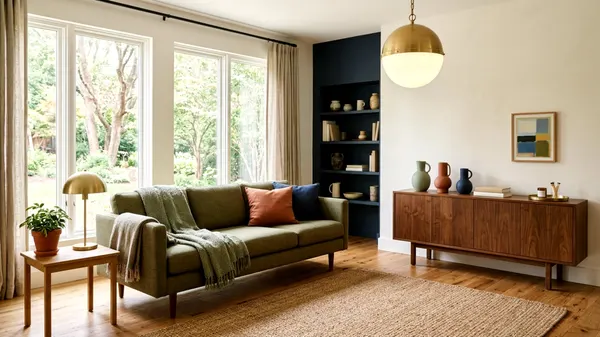
A mid century modern living room mixes warm wood furniture with clean lines and bold colors to create a comfortable space that feels both retro and fresh.
Words by Pilar Whitaker
- 8 minute read
A mid century modern living room relies on clean lines and natural materials to create a relaxed space. You get the look by pairing warm wood furniture on tapered legs with bold accent colors and geometric patterns. The style strips away heavy ornamentation in favor of simple shapes that put function first.
The shapes and materials that rule the room
Mid century design balances crisp straight lines with smooth organic curves. Furniture makers from the postwar era wanted their pieces to look light and airy. They used solid wood frames and exposed structural parts rather than hiding them under heavy fabric.
You will see a lot of rich teak and dark walnut. Designers commonly paired these warm woods with cool metal frames or glass tops to keep the room feeling open. Leather adds a natural texture that ages well on lounge chairs and sofas.
Avoid anything fussy or overly carved. The beauty of this style comes from the grain of the wood and the shape of the frame. A simple rectangular coffee table with a softly rounded edge captures the look. Glass coffee tables work well because they let you see the legs and the rug beneath them.
When shopping for furniture, look for these common materials:
- Solid walnut or teak frames with a smooth oil finish instead of a glossy varnish.
- Molded fiberglass or hard plastic formed into organic curves for casual seating.
- Top-grain leather upholstery that develops a soft patina over time.
- Brushed brass and matte black steel for legs, light fixtures and hardware.
- Heavy woven wool or linen blends for sofa cushions.
Mixing warm wood tones without matching
You do not need a matched set of teak furniture to get this look. Buying all your pieces from the same collection can make a room feel flat. The most interesting spaces mix different wood tones intentionally.
Start with the largest wood surface in your room. If you have light oak floors, dark walnut furniture provides a crisp contrast. Dark floors need lighter woods like ash or bright teak to keep the pieces from disappearing into the shadows.
Bring in small accents to bridge the gap between different woods. A teak side table works next to a walnut media console if you tie them together. You might use a brass tray or a white ceramic lamp to break up the wood surfaces.
Wood paneling on walls also fits this style. Narrow vertical slats of oak or walnut add architectural interest behind a sofa or a television. If you add a wood wall, keep your main furniture painted or upholstered to avoid a heavy cabin feel.
Low seating on tapered legs
Couches and lounge chairs sit closer to the floor in a mid century modern living room. The seat cushions tend to be firm and tailored rather than soft and slouchy. The backs of the sofas often run in a straight horizontal line to keep the room looking wide and open.
The most recognizable feature is the tapered leg. Chairs and sofas sit on slender wooden or metal pegs that angle slightly outward. These legs lift the furniture off the rug and leave open space underneath. Seeing more of the floor can make your whole room feel larger.
Skip the heavy recliners and fabric skirts that hide the bottom of a sofa. Choose seating with slim armrests and a visible frame. An exposed wood back or metal arm gives the piece an architectural feel from every angle.
Tufted cushions are another common detail. Shallow button tufting on a sofa back adds texture without looking cluttered. Look for crisp piping along the edges of the cushions to emphasize the straight lines of the frame.
Setting up a conversational floor plan
Mid century modern living rooms focus on socializing and conversation. The furniture arrangement should encourage people to sit down and talk face to face. Floating your furniture away from the walls helps create this intimate feeling.
Start by placing a low sofa facing the center of the room. Add two lounge chairs opposite the sofa or angled slightly on either side. A large coffee table in the middle ties the grouping together and gives everyone a place to set a drink.
Keep the pathways wide and clear. The light and airy furniture loses its impact if people have to squeeze past it when they walk through the room. Leaving empty space around your main seating area lets the shape of the furniture stand out.
A long media console or sideboard works best against the longest wall. These low cabinets offer storage without taking up visual space. You can use the top surface to display books, trailing plants and simple table lamps.
Accent colors that feel true to the era
The foundation of a mid century room rests on neutral walls and natural wood. You then build energy by adding saturated earth tones. The classic colors include mustard yellow, burnt orange, olive green and deep teal.

You can introduce these shades through a single large piece. A burnt orange lounge chair makes a strong statement against a plain gray sofa. You could also paint one wall in a deep forest green to anchor your warm wood shelves. Using opposite shades carefully keeps the strong colors balanced.
Small doses of color work just as well if you prefer a quieter room. Throw pillows, ceramic vases and hardcover books bring enough color to wake up a neutral space. Stick to muddy or muted versions of your colors rather than bright primary shades.
Graphic black and white accents provide a sharp contrast to warm earth tones. A black leather chair or a white marble side table breaks up the heavy blocks of color. These neutral extremes help the orange and teal accents stand out.
Lighting with simple sculptural forms
In a mid century room, floor lamps and pendants act as sculptural art. The fixtures use simple geometric shapes like globes, cones and angled cylinders.
A central chandelier with multiple arms reaching out in different directions adds drama. These sputnik-style fixtures draw the eye up and spread light evenly. You can also use large frosted glass globes to cast a soft glow over a sitting area.
Floor and table lamps often feature asymmetrical shapes or adjustable arms. An arc lamp curving over a sofa provides overhead lighting without needing a ceiling box. Choosing matching wall fixtures in matte black or brushed brass ties the metal accents together.
Avoid ornate glass shades or crystal drops. Look for metal shades with clean cut edges and thin structural rods. Mixing a black floor lamp with a brass table lamp adds depth to the room.
Rugs and textiles with geometric pattern
Your floors and windows give you the best chance to add pattern. Mid century modern rugs favor large asymmetric shapes and repeating geometric lines. You will see interlocking diamonds, sharp starbursts and abstract kidney bean shapes.
Keep the rug pattern bold but the colors restricted. A rug with two or three complementary tones grounds the furniture without fighting for attention. A heavy shag rug in a solid neutral color offers another texture if you prefer plain floors.
Window treatments stay crisp and functional. Mid century modern curtains hang straight down without heavy pleats or fussy valances. Picking the right window fabrics means looking for simple weaves in solid colors. A subtle linen texture allows diffused light to filter through while keeping the lines of the room clean.
Use ceiling track hardware to hang your curtains. Letting the fabric run from the ceiling all the way to the floor makes the room look taller. Wide panels that pull completely back from the glass maximize the natural light during the day.
Adding art and accessories
The accessories in a mid century room should look deliberate and spare. Covering every surface with small items ruins the clean lines you want to achieve. Choose a few large, interesting objects instead of many small ones.
Large abstract canvases look striking on white walls. You can look for paintings with bold blocks of color or sweeping organic curves. Geometric wood panels also fill a large blank wall nicely.
A sunburst clock makes a classic focal point above a fireplace or a sideboard. These iconic clocks feature wooden or metal spikes radiating from a central dial.
Group your small accessories together to create impact. A cluster of three ceramic vases in varying heights looks better than spreading them across the room. Use wooden trays on your coffee table to corral your books and remote controls.
Houseplants are a common feature of the style. Large floor plants with interesting leaf shapes soften the sharp corners of the furniture. A tall snake plant or a broad split-leaf philodendron brings a bright punch of green into the space.
Mixing the style with modern comfort
A good living room should not feel like a historic movie set. You want to capture the spirit of the era while keeping the room comfortable for daily use. Mixing mid century pieces with contemporary items keeps the room feeling fresh and personal.
Start with one or two standout pieces rather than replacing everything at once. A classic walnut credenza and a sharp accent chair set the tone. You can pair them with a deep contemporary sofa that you actually want to nap on.
Bring in things you love that have nothing to do with the design era. Personal framed photographs and travel souvenirs stop the space from feeling rigid. The clean background of the room highlights the objects that matter to you.
Hide modern technology within vintage frames. A long mid century sideboard makes an excellent stand for a modern television. You get the clean wooden lines of the past while storing your cables and consoles out of sight.