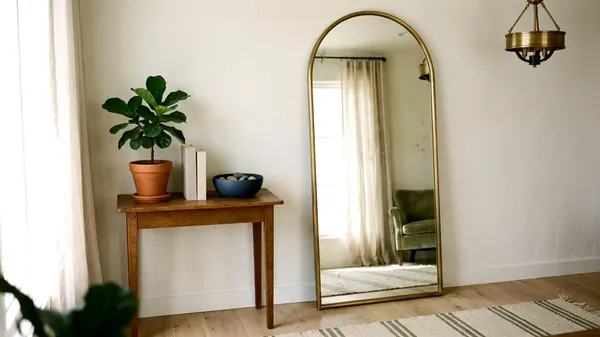
- HomeX Magazine
- Decor Trends
- How to choose and hang a large wall mirror that lights a room
How to choose and hang a large wall mirror that lights a room
Hang a large wall mirror to bring natural light and depth into a dark room, and learn how to choose the right size for a decorative wall mirror.
Words by Rosalind Tillery
- 7 minute read
A large wall mirror acts like a window you can move around the room. Hanging one opposite a light source bounces sunshine into dark corners and makes the whole space feel bigger. The trick is getting the scale right and securing it safely to the framing.
Find the right reflection
Position matters most. A mirror doubles whatever sits across from it. Blank walls double the blankness. A window with a nice tree outside brings the outdoors in.
Walk around the room with a small hand mirror. Hold it flat against the wall at eye level. Look closely at what appears in the glass from different angles.
Aim for a light source or an architectural detail. A window works best. A dining table chandelier also looks good. Try to catch the morning or afternoon sun.
Bounce the light into the darkest part of the room. A mirror facing a window pulls light deep into a dark hallway. Stand in the shadows and look toward the bright spots. Place the glass where it catches that brightness.
Placing a glass across from a doorway opens up a cramped entry. You see into the next room before you walk through. This makes the room feel much larger, which is a helpful trick for a small living room.
Match the mirror size to your furniture
Scale determines how the piece fits the room. A tiny glass over a wide sofa looks lost. A massive frame over a narrow console table feels heavy and unbalanced.
Use the furniture directly below the mirror as a guide. The glass should span about two thirds the width of that piece. Measure your sofa, dresser or mantel and calculate two thirds of that width. Buy a piece close to that dimension.
Leave empty wall space on both sides. The wall space acts as an outer border and gives the eye a place to rest. Keep the frame narrower than the furniture. You never want the edges to stick out past a console table.
Height matters too. Leave a gap between the top of the furniture and the bottom edge of the frame. A gap of several inches works well. It leaves room for a lamp, a vase or a stack of books.
Tall ceilings handle taller frames. Low ceilings need a squatter shape. Keep the top edge well below the crown molding so the wall does not feel cramped.
If you have an empty wall with no furniture below, use a tall floor mirror. A vertical rectangle fills the space without looking like it floated away from a base.
Pick a shape that balances the room
Shape changes the mood of the room. Rectangular frames look traditional and grounded. Round pieces soften harsh lines. Arched tops add architectural interest.
Look at the shapes already in the space. A room full of square tables and boxy sofas benefits from a round piece. The curves break up the straight lines and stop the room from feeling like a grid.
A rectangular piece works well in a dining room. It mimics the shape of the dining table. Hang it horizontally to stretch the room wider. Hang it vertically to make the ceiling look higher.
Arched tops mimic the look of traditional windows. They soften a plain wall without looking entirely circular. A flat bottom edge sits nicely above a mantel. Adding an arched glass is a classic way to decorate a fireplace wall.
Abstract shapes draw attention. They work as art. A wavy or asymmetrical frame stands out. Use these when you want a focal point rather than just a reflector.
A decorative wall mirror often features an unusual shape. It acts as a centerpiece. Let the shape dictate the rest of the decor on that wall. Keep surrounding art simple so the wall does not feel busy.
Choose between leaning and hanging
Hanging the glass frees up floor space. It keeps the piece out of the way of vacuums and pets. It feels permanent and intentional.
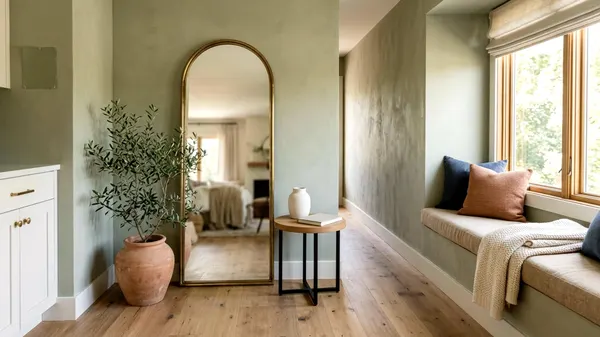
Leaning offers flexibility. A floor piece leaned against the wall adds casual charm. You can move it around easily when you rearrange the room.
Consider your wall space and floor traffic. A busy hallway needs a hanging piece. A quiet bedroom corner can handle a leaning glass.
Heavy materials put stress on the wall. Leaning transfers much of that weight to the floor. The wall just keeps the frame from falling forward.
A leaning piece reflects the ceiling more than a flat hanging one does. Check what ceiling fixtures show up in the reflection. You might catch a bright ceiling fan light instead of the room.
You still need to secure a leaning piece. A heavy glass slab can slide on a hard floor or tip forward. Use a wall anchor and a heavy-duty strap. Attach the strap to the back of the frame and a wall stud.
Mantels make great spots for leaning smaller pieces. A heavy framed glass rested on a mantel looks relaxed. It also avoids drilling into masonry or tile above a fireplace.
Secure the piece to the wall studs
Glass and wood weigh a lot. Drywall alone will not hold a large wall mirror. The hanging hardware must anchor into the wood studs behind the drywall.
Use a stud finder to locate the vertical framing in your wall. Mark the edges and the center of the stud with a pencil.
Check the weight of the mirror before you buy hardware. A thick glass in a solid wood frame is heavy. Buy hooks or a French cleat rated for much more than that weight.
A French cleat is a common choice for heavy items. One metal bracket screws into the wall studs. The matching bracket attaches to the frame. They interlock for a secure, flush fit against the drywall.
Avoid picture wire for heavy glass. Wire can stretch over time and puts all the stress on two small rings. The frame will sag and pull away from the wall.
Use two separate wall hooks instead of wire. If you miss a stud, use anchors rated for the weight and follow the label, and ask a licensed pro about a very heavy mirror.
Use at least two points of contact. Two hooks distribute the load so the glass stays level over time. Check your work with a bubble level before you tighten the screws. A crooked frame ruins the look of the whole room.
Keep glare and clutter out of the frame
Mirrors show you everything twice. A messy pile of mail on the console reflects back into the room. A cluttered kitchen counter doubles in size.
Check the opposite wall before you hang the glass. A blank white door looks boring. A dark television screen looks like a black hole. Move the piece a few inches left or right to change the view.
Sometimes a small shift hides a messy bookshelf and reveals a tidy plant instead. This makes a large mirror excellent wall decor for an empty space.
Direct sunlight causes problems too. A glass facing a bright western window blasts intense evening sun into the room. The glare blinds anyone sitting on the sofa.
Catch the light on an angle instead. Place the piece on an adjacent wall rather than directly opposite the brightest window. The light bounces softly sideways.
Overhead lights also create glare. A piece hung too high reflects bare ceiling bulbs. Lower the frame to catch the room and the furniture, not the light fixtures.
Keep the glass clean. Dust and fingerprints stand out in the afternoon sun. A dirty glass makes the whole room look dull and tired.
Select a frame that fits your finishes
The frame ties the piece to the room. Wood frames add warmth and texture. Metal frames look crisp and industrial. Frameless glass disappears into the wall for a sleek look.
Match the frame to the furniture finish. A dark walnut frame pairs well with dark wood tables. A light oak frame suits airy, pale rooms. Painted wood frames blend into colored walls.
You can mix metals, but do it carefully. A brass frame works with black cabinet hardware, but it clashes with shiny chrome fixtures in a bathroom. Pick a dominant metal finish for the room. Match the frame to your lamps or your curtain rods.
A thick frame makes the piece feel like a heavy piece of furniture. A thin frame lets the glass do all the work. Consider texture when picking the material. A carved wood frame adds detail to a plain room, and a smooth metal band looks clean and modern.
Think about the edge of the glass. A beveled edge catches the light and bends it. It acts like a prism. A flat polished edge looks simple and contemporary.
The frame width changes the scale. A wide frame holds its own on a large wall. A narrow frame might look too delicate in a big room.
Step back and look at the whole wall. The right frame feels like it belongs there.