
- HomeX Magazine
- Floors and Layouts
- How to divide an open room with curtains
How to divide an open room with curtains
Find out how to hang a room divider curtain to create a private bedroom or home office in an open space without building permanent drywall.
Words by Pilar Whitaker
- 7 minute read
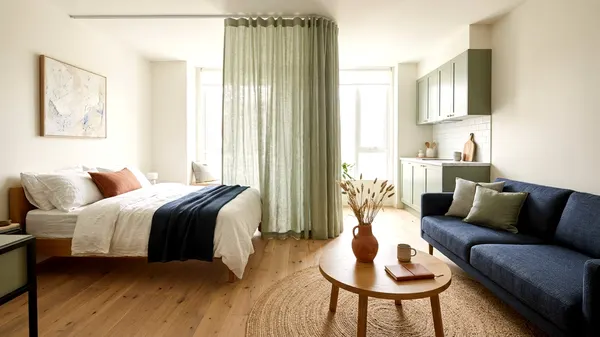
Hanging a room divider curtain splits an open floor plan into separate living spaces without the dust of drywall construction. Heavy fabric panels carve out a quiet sleeping area or block bright light for a home office.
You pull them shut for privacy and open them up to let fresh air flow across the house. Adding fabric creates distinct zones while keeping the original square footage intact. A curtain gives you a quick divider without building a wall, though it is smart to check local rules if you rent or plan to sleep behind it. The thick fabric softens hard room surfaces and adds heavy texture to plain drywall boxes.
Decide which zone needs the privacy
An open room forces different activities to share one space. Identify the specific spot that requires the most quiet and darkness. A bed usually takes priority for absolute privacy. Placing a sleeping zone in a back corner allows the fabric to close off a smaller section of the room.
A home office needs separation from household noise. Tucking a desk behind a fabric barrier hides work clutter from the main living area. You can leave your papers out and simply pull the fabric shut. Shutting the curtain signals the end of the workday.
A dining area often just needs a visual break from the main sitting space. Light filtering panels separate a dining table from the sofa without blocking conversation. You can hide dirty cooking pots from your dinner guests.
A shared kids room benefits greatly from a fabric divider. Giving each child their own space stops bedtime arguments. You can pull the divider open during the day for a large play area.
Think about what happens on both sides of the divide. Sleeping areas demand heavy barriers. Work areas need visual separation from television screens. Group quiet activities together to keep loud noises on the other side of the room.
Sketch the line the curtain will follow
Trace the intended path on the ceiling. Masking tape helps visualize the exact boundary on the floor. Tape a line across the room to see where the fabric will fall. The tape shows exactly how much floor space each new room gets.
Walk around the taped line. Adjust the boundary until your furniture fits comfortably inside the new zone. A desk needs enough clearance for a chair to push back. Move the tape until every piece of furniture functions properly.
Straight lines work best for simple setups. A single straight track across the middle of a room divides the space into two clean rectangles. An L-shaped track can enclose a corner bed completely. Keep the ceiling path clear of light fixtures and return air grilles.
A curved path feels softer. Bending a track creates a smooth fluid line around a sitting area. Keep the layout simple for an easier installation. Straight runs and clean right angles require less specialized hardware.
Ceiling track or tension rod and what each holds
Tracks mount directly to the ceiling. Tension rods press firmly against two opposing walls.
Ceiling tracks support heavy fabric over a long span. You screw the metal channel directly into the ceiling joists for maximum strength. Roller glides slide smoothly inside the metal channel. A ceiling track suits a wide room better than a rod because it is fixed along its length.
Ceiling tracks come in various materials. Plastic tracks cost less and flex easily. Aluminum tracks often cost more but tend to hold up better to daily use.
Finding the ceiling joists requires a stud finder. Drywall anchors can pull out under heavy drapes, so aim for solid framing and check the hardware label for its weight rating. If you are unsure, ask a licensed pro.
Tension rods wedge between two solid walls. They hold lighter fabrics across narrow gaps. A thick tension rod works well in a tight alcove or across a wide doorway. Tension rods leave no holes in the drywall because you just twist the rod until it grips the paint.
Tracks handle heavy velvet and frequent pulling. They provide a permanent solution for a daily barrier. Tension rods bow or slip if the fabric weighs too much. Use tension rods for temporary divides or lightweight sheer panels.
Pick fabric weight for sound, light and privacy
Heavy fabric blocks light and muffles sound. Sheer fabric just softens the view.
Thick cotton or lined velvet creates a true visual wall. Dark fabrics block morning sun from reaching a sleeping area. Heavy panels also absorb echoing noise in a large room. The dense material dampens footsteps and television chatter.
Canvas offers a sturdy option for casual spaces. It holds its shape well and resists wrinkles. Boucle adds heavy texture to a modern room. Sheer voile provides the most delicate separation.
Linen and unlined cotton filter the light. They blur the view of a messy desk while keeping the whole space bright. You can see movement through thin fabrics but not the fine details. Light filtering drapes work well for dining zones.
Heavy weight fabrics do trap heat. A thick velvet divider may keep a sleeping zone warmer. It might also block air conditioning from reaching that corner. Balance your privacy needs with the room temperature.
Consider how much you want to block. A home office might just need a thin visual barrier while a bedroom requires dense fabric for complete privacy. You might want tailored living room curtains on both sides. Double sided fabric ensures neither room looks at an ugly lining.
Size panels so they close with enough fullness
Curtains need extra width to fold gracefully. Flat fabric looks like a stretched bed sheet.
Buy panels much wider than the opening. Fabric should gather into soft folds even when pulled completely shut. Wide panels block annoying light gaps at the edges. Generous fabric width looks rich and intentional.
Height matters just as much as width. The fabric should hang from the ceiling and barely brush the floor. Short panels let light spill underneath. A gap at the floor makes the room look cheap and unfinished.
Custom panels cost more but fit perfectly. Store-bought panels might require hemming. You can hem fabric quickly with iron on mending tape. Hemming after a hot wash prevents the curtain from shrinking and hovering above the floor later.
Sewing panels together creates one continuous barrier. Multiple narrow panels leave gaps that ruin the illusion of a solid wall. Pinning panels together works if you cannot sew. Full continuous panels sweep across the room smoothly.
Large panels carry a lot of visual weight. Choose a neutral color if you want the divider to blend in. A bold color turns the closed curtain into a giant accent wall.
Hardware options that complete the installation
Hooks and glides connect the fabric to the ceiling track. Plastic glides run silently inside metal tracks. Metal hooks offer strength for heavy velvet.
Wand pulls protect the fabric from dirty hands. A long acrylic wand attaches to the leading edge of the drape. You pull the wand instead of grabbing the fabric. Wand pulls also make heavy panels easier to move.
Wall brackets can support a traditional curtain rod across a narrow room. A sturdy rod spanning wall to wall works well in long narrow spaces. This avoids drilling into a textured ceiling. Center support brackets keep a long rod from sagging.
Curtain rings with clips offer a fast hanging method. You clip the rings directly to the top edge of the fabric. This requires no special sewing or pleater tape. Clip rings look casual and suit a relaxed room style.
Leave a clear route to doors and windows
Traffic flow keeps the room functional. The dividing line must never trap anyone in a corner.
Check the path to the bathroom and the front door. A good layout leaves a wide aisle for walking past the closed fabric. You should not have to squeeze past a sofa to reach the hallway. Keep the main walking routes completely clear.
Windows need breathing room. Running a divider straight into a window frame blocks natural ventilation. Keep the dividing line away from exterior windows that swing inward. Allow enough space to reach window latches easily.
Emergency exits must remain accessible, and a curtain should never block the only path out of a sleeping zone or a window you may need to use to get out. Keep heavy furniture away from the fabric panels to prevent trips and falls.
Make it look intentional, not like a hospital screen
The divider should match the house architecture. Hardware makes a big difference in the final appearance.
Paint a metal ceiling track to blend in with the ceiling finish. Recessing the track into the drywall creates a very clean architectural detail. Hidden hardware makes the fabric look like it drops straight from the plaster.
Fabric finishes the look. Pinch pleats look structured and formal while grommets slide easily but feel very casual. Ripple fold headers create even waves that look modern. Choose a header style that fits your furniture.
Tiebacks add structure when the divider stays open. Gathering the fabric against a wall makes the panels look deliberate. You can make the space feel bigger by integrating the gathered fabric into your room layout. Gathering fabric against a structural column works too.
Hanging large wall art on the remaining solid drywall grounds the space. This draws attention away from the fabric partition. Grounding the room with a large rug helps define the space even further. A rug placed along the new boundary reinforces the separation.