- HomeX Magazine
- Floors and Layouts
- How to plan mudroom cabinets for a small entry
How to plan mudroom cabinets for a small entry
Planning mudroom cabinets in a small entry means choosing the right depth and mixing open hooks with a bench to keep daily coats and shoes organized.
Words by Pilar Whitaker
- 8 minute read
Fitting mudroom cabinets into a tight entryway requires a shallow profile and strict rules about what stays by the door. You need open hooks for quick drops and a sturdy bench for removing shoes.
Decide what belongs by the front door
Small entryways quickly disappear under mounds of bulky coats and heavy winter boots. You cannot store every piece of outdoor gear in a compact space, so look at what your household drops on the floor right now. Focus only on the items you use every day.
Heavy winter parkas and summer sports equipment belong in a main hallway closet. Mudroom cabinets function best when they hold only the current season of gear. Assign a strict limit for each person. A small, fixed limit for each family member helps keep the clutter under control.
Count the backpacks, dog leashes and heavy umbrellas that require a permanent home. Bags take up significant width and often dictate how wide your custom cubbies must be. A backpack left on the floor is a tripping hazard. Give these awkward items dedicated space in your design.
Wet umbrellas and muddy boots require different storage than a clean canvas tote bag. Sort your daily items into wet and dry categories. This simple division helps you decide exactly where hooks belong and where you need strong water protection.
Rotating items keeps the cabinets from overflowing when the weather turns cold. Keep a plastic bin in the garage for off-season storage. Summer hats and thin fall jackets disappear until the weather turns warm again. This habit keeps a small entry feeling roomy.
Measure the wall and choose a cabinet depth
Walkways must remain clear for people carrying groceries or pushing a heavy stroller. Measure the wall where you plan to install the new cabinets. Note any fixed obstacles. You need enough bare floor space to easily walk past someone sitting on the bench.
Before you order any materials, write down what exactly sits on the wall right now. You have to account for these common obstacles:
- Light switches for the front porch and interior hallway
- Electrical outlets placed near the baseboards
- Heating vents located in the floor or lower wall
- Thermostats and alarm system keypads
- Thick door casings and decorative baseboard trim
Standard closet depth wastes valuable walking room in a tight entry space. Deep cabinets call for hangers, and most households skip hangers and drape coats over the nearest chair. Shallow cabinets save floor space and take simple coat hooks.
Consider how far cabinet doors will stick out when you pull them open. Swing clearance eats into your walking path. Shallow base cabinets keep the footprint small. In a very narrow hallway, even standard upper cabinets can feel heavy overhead.
Build upward rather than outward to maximize the limited storage capacity. Tall cabinets, anchored to the wall studs as their instructions say, draw the eye up and use the empty wall space near the ceiling. Put out-of-season hats on the highest shelves. You keep the floor clear and gain storage.
Match the storage style to your household
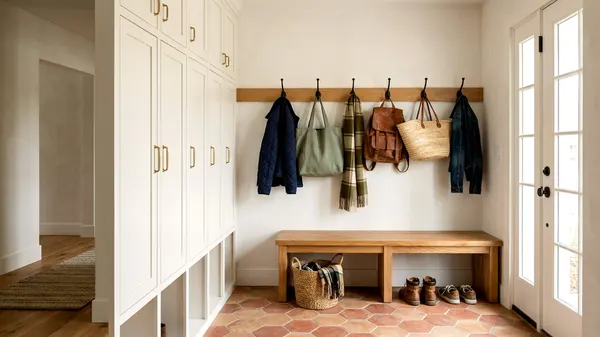
Open hooks suit busy families. Children are more likely to hang a wet jacket on a simple peg. Hooks hold bulky items like thick scarves and heavy tote bags. You trade a neat look for reliable daily use.
Closed lockers hide the messy reality of daily life behind a solid, flat door. They create a clean look in your entryway. Lockers suit households willing to open a door and hang things up properly every time. They also protect your wool coats from stray cooking smells and floating dust.
Solid doors require tough hardware that matches the rest of your home. Think about where to put cabinet pulls and knobs so every family member can reach them. Heavy wooden doors add visual weight to a small room. You might prefer doors with flat panels to keep the tight space feeling wide open.
Cubbies split the difference between open hooks and closed lockers. Open wooden boxes create individual storage zones for each family member. You can slide woven baskets into the upper cubbies to hide smaller items like winter gloves. Lower cubbies hold dirty shoes apart and let fresh air circulate around damp sneakers.
Some locker designs feature an open base with legs instead of a solid wooden plinth. Raised cabinets make the floor much easier to mop and sweep. You can quickly retrieve stray shoes that get kicked underneath the wooden structure. A raised design also makes the whole unit look more like traditional freestanding furniture.
Build a seating area for removing wet shoes
Every successful mudroom includes a solid place to sit down. Hopping on one foot while pulling off a tight winter boot ruins the feeling of coming home. A sturdy bench anchors the cabinet run. You can top the seat with a simple cushion or leave the bare wood exposed.
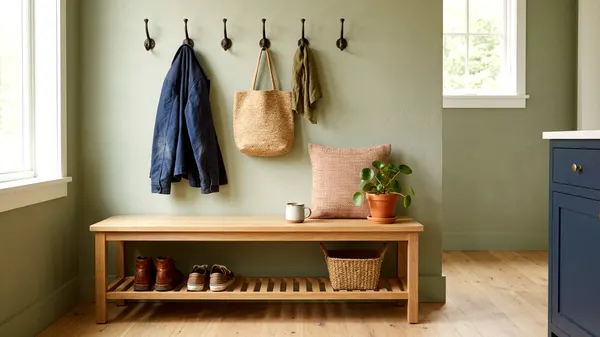
The space directly under the seat offers prime real estate for everyday shoe storage. Avoid installing closed drawers directly on the floor level. Damp shoes trapped in a dark wooden drawer can create odors and encourage mold. Open shelves allow wet soles to dry out naturally.
Boots covered in snow or rain need a waterproof landing zone. Slide a heavy rubber drip tray into the open space beneath the seating bench. The tray catches melting snow before it spreads across the floor. You can pull the tray out quickly to wash it in the sink.
Keep the bench height comfortable for average adults to use. Children grow quickly and will easily adapt to a standard seating height over time. A solid wood seat withstands metal rivets on jeans and heavy shopping bags. Choose a hardwood that resists dents and scratches.
Upholstered benches feel inviting but need frequent cleaning. Canvas or heavy denim fabrics handle the friction of daily use much better than soft linen. Consider a removable cushion cover that you can throw straight into the washing machine. Bare wood remains the most practical choice for a home with energetic pets and muddy yards.
Select flooring that tolerates standing water
Mudroom cabinets rest directly on the floor and trap whatever moisture pools around them. Wood flooring absorbs water and swells over time. Puddles left by winter boots can damage the bottom of your new cabinets. You need a hard surface that resists water.
Porcelain tile provides an excellent solid defense against harsh wet weather. It handles gritty mud and heavy foot traffic well. Dark grout can help hide the dirt that tracks in from the muddy yard. Consider which kitchen flooring stands up to harsh daily traffic before making a final choice.
Slate has a textured surface that can give more grip, but check the slip rating with the supplier for a wet entry. Extend your durable flooring a few feet beyond the cabinet area. This wide buffer zone protects your main house flooring from stray water drops.
Transition strips connect the hard entryway floor to the rest of the house. Plan these seams carefully because no one wants to trip while carrying heavy groceries. A flush transition looks clean and keeps the primary walking path smooth. Protect the floor immediately in front of the bench with a fully washable rug.
Cold floors make leaving the house in winter thoroughly unpleasant. Radiant floor heating mats can go under new porcelain tile, but a licensed electrician should install and wire them to the maker's instructions. The gentle heat warms your frozen feet and can help wet floor puddles evaporate faster.
Plan around existing light switches and outlets
Entry walls usually house essential electrical controls for the front porch and interior hallway. Moving an electrical box means cutting into finished drywall and calls for a licensed electrician. Take a careful inventory of every switch, outlet and floor vent on your target wall. Plan the cabinetry around these fixed utility points.
Electricians can move basic outlets, but the process adds significant expense and extra time. A simpler solution leaves the wall open in the middle. You can securely mount a row of hooks right below the existing light switches. The bench goes under the switches to leave the electrical controls perfectly accessible.
Outlets added by a licensed electrician near the cabinet base offer a dedicated place to charge phones or stick vacuums. Plan the cabinet back so an existing outlet stays accessible. You can hide bulky charging stations inside a designated open cubby. Keep chargers and cords where air can move around them while devices power up.
Good lighting helps you find matching shoes on dark winter mornings. Overhead ceiling lights sometimes cast harsh dark shadows inside deep wooden lockers. Adding fixtures directly to the open wall above the bench provides focused, useful illumination. Read up on how to choose wall sconces to find a style for your entryway.
Many households use the entry wall for smart home command screens or digital picture frames. Plan an eye-level shelf near an outlet if you rely on these glowing screens daily. You want the device visible but out of the way of swinging backpacks. A dedicated charging shelf prevents delicate electronics from falling onto the hard tile floor.
Pick cabinet finishes that wipe clean easily
Entry cabinets take more daily abuse than almost any other furniture piece in your house. Wet coats brush heavily against the sides, and muddy shoes constantly kick the bottom decorative trim. Flat matte paint shows every smudge and dark scuff mark clearly. You need a slick painted surface that releases dirt with a simple damp rag.
Satin or semi-gloss paints often hold up well in active high-traffic zones. The slight shine creates a hard protective shell that resists scratching and annoying chipping. Mid and dark colors can hide fingerprints better than stark white. Charcoal gray, deep blue and forest green are forgiving choices for busy entryways.
Bare wood cabinets need a protective finish such as polyurethane, applied as the label directs, to help block moisture. Water marks can stain unfinished wood surfaces. Check the critical seals around the bottom edges where the wooden cabinets meet the wet floor. A clear line of silicone caulk can help keep standing water from seeping underneath the base.
Hardware must endure aggressive pulling from impatient people in a desperate hurry. Flimsy knobs can pull loose over time under heavy wet coats. Install large, solid metal hooks directly into the strong wooden cabinet framing. Thick hardware handles allow you to grip the heavy doors easily even while wearing bulky winter gloves.
Double hooks use the vertical space well. The top prong holds a bulky winter coat while the bottom loop safely catches a lightweight canvas bag. Space the metal hooks far enough apart that heavy winter jackets hang straight down without bunching. Crowded wet coats may not dry properly and can end up smelling musty.